
Cybersecurity career guides love one number: a multi-million-role global shortage. It gets repeated so often it’s started to function as marketing rather than information — and it’s telling you less than you’d think about whether you, specifically, can land an entry-level job in the next twelve months. The real picture in 2026 is more interesting and more useful: demand is real, but it’s shifted shape, and knowing how it’s shifted changes what you should actually spend your time learning.
The Honest Version of “High Demand”
ISC2’s often-cited 4.8 million global workforce gap is a real figure, but it measures what organizations say they need — not open job postings. CyberSeek’s count of actual US cybersecurity job postings over a 12-month period comes in at roughly 514,000</cite> — a very different number from “millions of open jobs waiting for anyone with a certificate.”
More tellingly, a quarter of organizations reported cybersecurity layoffs in the same period the reported gap widened by 19%, and for the first time, budget — not talent — became the primary barrier organizations cite to staffing their security teams.</cite> Demand for skills is genuinely high. Willingness to fund entry-level headcount is a separate question, and it’s currently the tighter constraint.
There’s also a well-documented mismatch at the entry level: 38% of employers list CISA — a certification that itself requires five or more years of experience — as a requirement for what they’re calling an entry-level role.</cite> If you’ve been rejected from “entry-level” postings that seem to want a senior analyst, that’s not you doing something wrong; it’s a known, widely reported hiring dysfunction in this field.
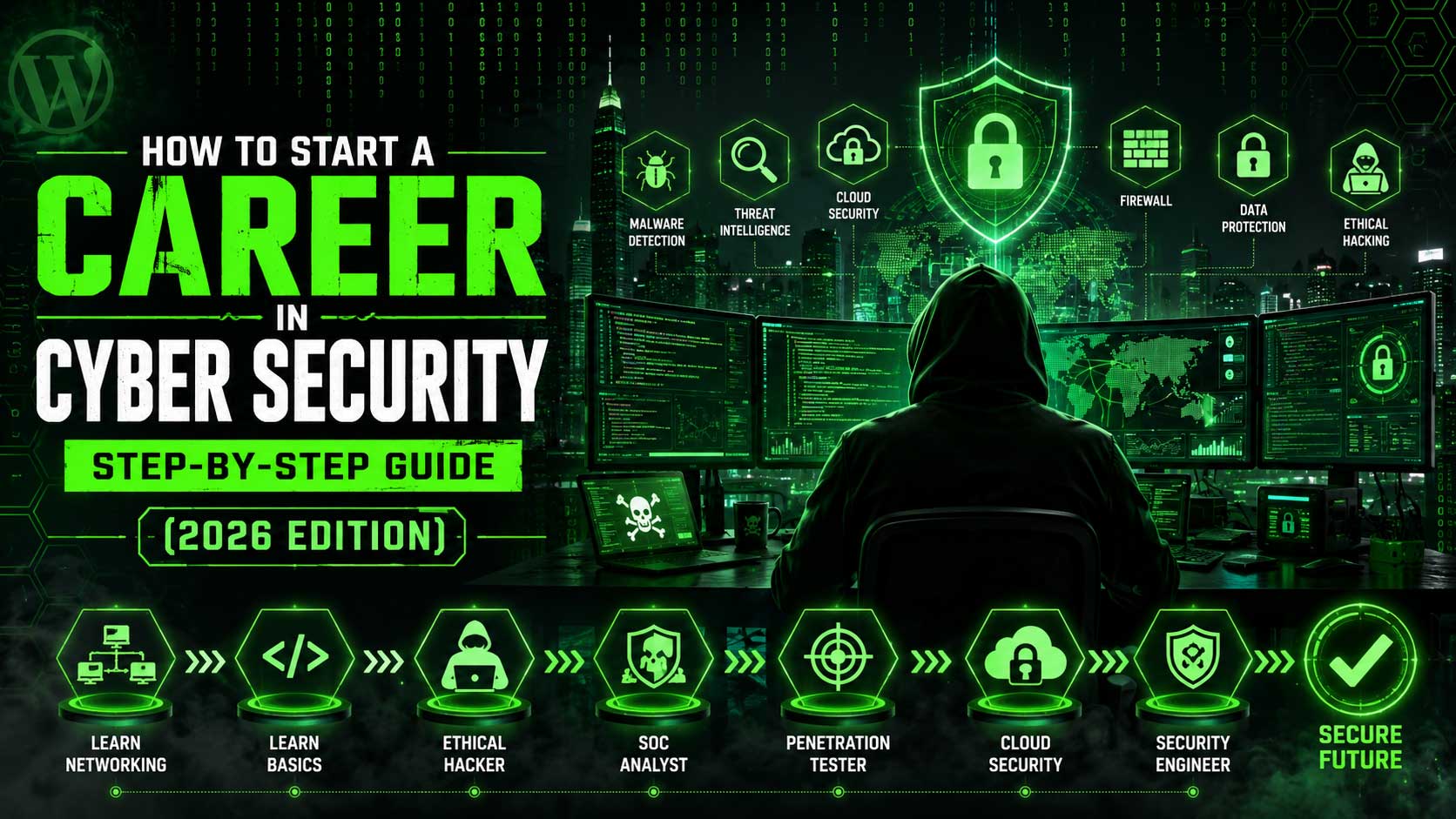
Cybersecurity is one of the fastest-growing career fields in the world — and for good reason. With the rise in cyberattacks, data breaches, and AI-driven hacking attempts, organizations are constantly looking for skilled cybersecurity professionals. If you’re someone who’s passionate about technology, problem-solving, and protecting systems, then cybersecurity is a great career choice in 2025 and beyond. In this guide, we’ll walk you through how to start a career in cybersecurity, the skills you need, top certifications, and career paths — step by step.
None of this means don’t pursue cybersecurity. It means: skip the roadmap that assumes any certificate guarantees a job offer, and build toward what employers are actually short on.
What’s Actually Short: AI-Adjacent Security Skills
The one area of unambiguous, fast-growing demand is AI security. AI jumped into the top five most in-demand cybersecurity skills in ISC2’s 2024 workforce study, and ISC2’s own CISO has said it’s likely to become the single most in-demand skill within the next year.</cite> By the 2025 study, AI/ML security ranked as the #1 skills need, cited by 41% of respondents — up from 34% the year before.</cite>
This is also the one place where entry-level hiring appears to be expanding, not contracting: rather than eliminating early-career roles, AI adoption in security operations is creating new opportunities for candidates who combine technical grounding with strong human judgment, and roughly a third of surveyed professionals think AI security tool adoption could increase demand for entry-level positions specifically.</cite>
1. Understand What Cybersecurity Is
Cybersecurity involves protecting computer systems, networks, and data from unauthorized access, theft, or damage. It includes everything from securing emails to defending against large-scale cyberattacks.
Common Cybersecurity Domains:
- Network Security
- Application Security
- Cloud Security
- Ethical Hacking / Penetration Testing
- Digital Forensics
- Security Operations (SOC)
- Compliance and Governance
Each domain has a different skill set — but all share a common goal: protect digital assets.
2. Why Choose Cybersecurity as a Career?
Global Demand
There’s a global shortage of over 3.5 million cybersecurity professionals (as per ISC²).
Every industry — from banking to healthcare — needs experts.
High Salaries
- Entry-level: ₹4–6 LPA (India) / $70,000+ (US)
- Mid-level: ₹8–15 LPA / $100,000+
- Expert-level: ₹20 LPA+ / $150,000+
Career Growth
Cybersecurity is not a job — it’s a lifelong learning path. You can grow from a SOC Analyst to CISO (Chief Information Security Officer).
3. Educational Background & Qualifications
You don’t always need a degree in cybersecurity to start — but a strong technical foundation helps.
Recommended Background:
- B.Tech / B.Sc in Computer Science, IT, or Electronics
- Diploma or Certification in Networking, Ethical Hacking, or Information Security
If you come from a non-technical background, start with:
- Networking Basics (TCP/IP, routers, firewalls)
- Operating Systems (Windows, Linux)
- Scripting (Python, Bash)
4. Learn Core Cybersecurity Skills
| Skill Area | What to Learn | Tools / Platforms |
|---|---|---|
| Networking | OSI Model, TCP/IP, DNS, VPNs | Cisco Packet Tracer, Wireshark |
| Linux | Commands, file permissions, users | Kali Linux, Ubuntu |
| Ethical Hacking | Vulnerabilities, exploits, tools | Metasploit, Burp Suite |
| Security Analysis | Log analysis, threat hunting | Splunk, ELK Stack |
| Cloud Security | IAM, encryption, compliance | AWS, Azure Security Center |
| Programming | Python, PowerShell, Bash | Any IDE or Linux terminal |
Tip: Learn hands-on — use virtual labs like TryHackMe, Hack The Box, or InfosecTrain labs.
5. Get Cybersecurity Certifications
Certifications help validate your skills and increase job opportunities.
Beginner Level
- CompTIA Security+
- EC-Council CEH (Certified Ethical Hacker)
- Cisco CyberOps Associate
Intermediate Level
- Certified SOC Analyst (CSA)
- CompTIA CySA+
- Microsoft Security Fundamentals
Advanced Level
- CISSP (Certified Information Systems Security Professional)
- CISM (Certified Information Security Manager)
- OSCP (Offensive Security Certified Professional)
Pro Tip: Choose a certification path aligned with your desired job (e.g., Penetration Tester → OSCP, SOC Analyst → CSA).
6. Build Hands-On Experience
Employers want real-world skills, not just theory.
Start Practicing:
- Use virtual labs like TryHackMe, HackTheBox, RangeForce
- Participate in Capture The Flag (CTF) challenges
- Contribute to open-source security projects
- Intern with IT or security teams
Create a GitHub portfolio or LinkedIn posts showing your learning progress — it makes you stand out.
7. Explore Cybersecurity Job Roles
| Role | Description | Average Salary (India) |
|---|---|---|
| Security Analyst | Monitors and defends systems | ₹5–8 LPA |
| Penetration Tester | Finds vulnerabilities | ₹8–15 LPA |
| SOC Engineer | Incident detection & response | ₹6–12 LPA |
| Security Consultant | Advises organizations | ₹10–18 LPA |
| Cloud Security Engineer | Secures cloud platforms | ₹12–20 LPA |
8. Stay Updated
Cyber threats evolve daily — so must you.
Follow cybersecurity blogs, YouTube channels, and communities like:
- InfosecTrain
- BleepingComputer
- HackerOne
- Reddit r/cybersecurity
- OWASP Foundation
Subscribe to threat reports and newsletters for the latest vulnerabilities and tools.
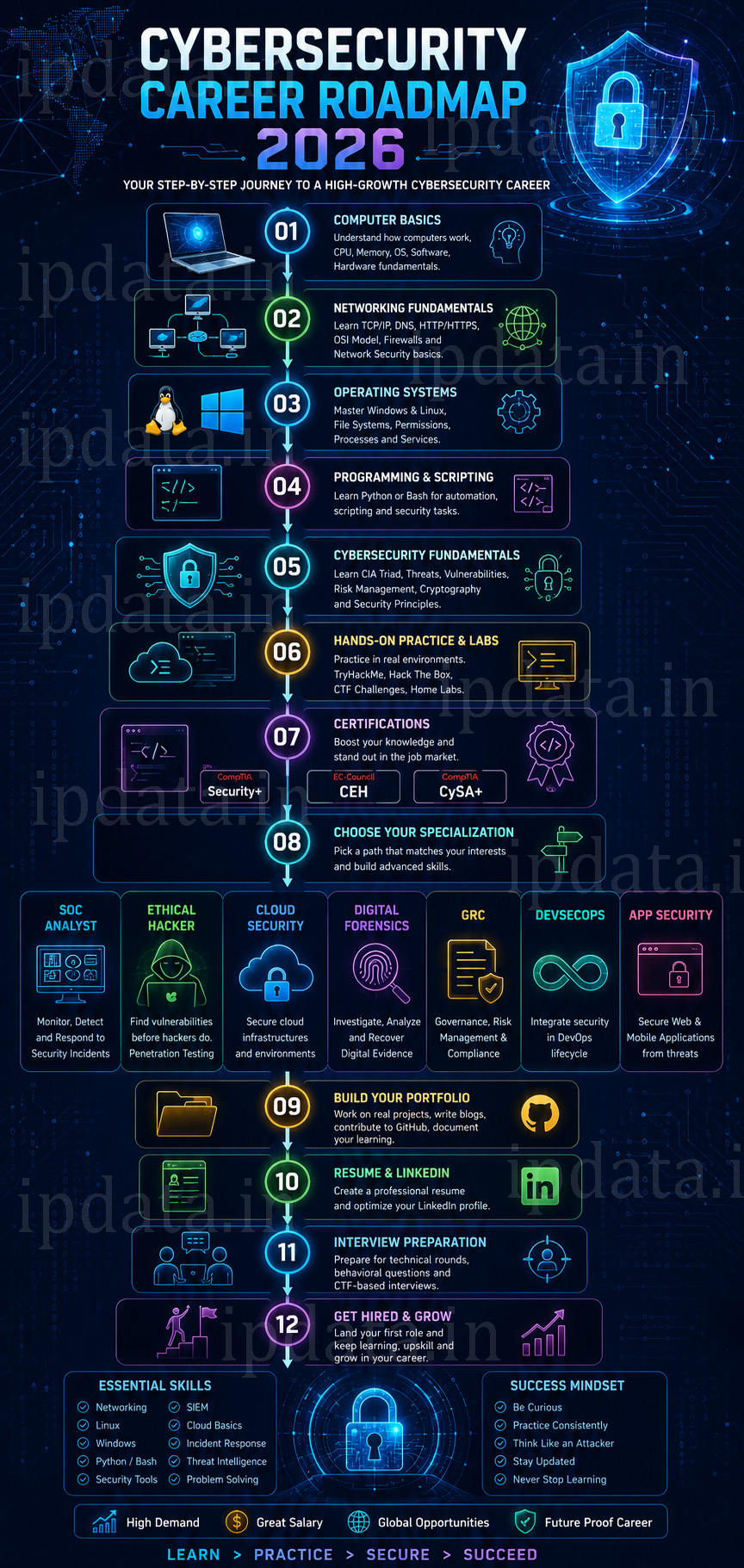
9. Career Roadmap Summary
- Learn Networking & OS Basics
- Get Certified (Security+ / CEH)
- Practice on Labs & Simulators
- Build Projects or Write Blogs
- Apply for Internships or SOC Jobs
- Keep Learning → Move to Specializations (Cloud, Pentesting, etc.)
Starting a career in cybersecurity is one of the smartest career choices in 2026.
With constant technological innovation and global digital transformation, cybersecurity will remain in-demand, high-paying, and future-proof.
So — start learning today, stay consistent, and protect the digital world.
Practically, that means: don’t treat “learn AI” as a bolt-on elective at the end of your roadmap. Build it in from the start alongside networking and Linux fundamentals.
Step 1: The Non-Negotiable Foundations
These haven’t changed and won’t anytime soon — they’re the substrate everything else sits on:
- Networking fundamentals — the OSI model, TCP/IP, DNS, subnetting, how firewalls and VPNs actually work. Skipping this to jump straight into “hacking tools” is the single most common mistake beginners make; every tool downstream assumes you understand what’s happening on the wire.
- Operating systems — comfortable in both Windows (most enterprise environments) and Linux (most security tooling, servers, and the command line you’ll live in daily). Kali Linux specifically for the tool ecosystem, but general Linux fluency matters more than the specific distro.
- Scripting — Python for automation and tool-building, Bash for quick system-level tasks, PowerShell if you’re headed toward a Windows-heavy environment. You don’t need to be a software engineer; you need to be able to read and adapt scripts, and write small ones from scratch.
Step 2: Certifications, Chosen for a Specific Target Role
Certifications work best as evidence you’re pursuing a specific path, not as a checklist to complete in isolation. Match the cert to the job, not the other way around:
| Target Role | Entry Certification | Why |
|---|---|---|
| SOC Analyst | CompTIA Security+ | Broad, vendor-neutral, widely recognized as the baseline entry cert |
| Penetration Tester | eJPT, then OSCP | OSCP is hands-on and respected, but it’s genuinely difficult — eJPT as a realistic first step |
| Cloud Security | AWS/Azure security certs | Cloud-specific skills are in sustained, growing demand as more infrastructure moves off-prem |
| AI Security | CompTIA SecurityAI+ | A newer, AI-focused credential introduced specifically to validate fundamental AI security knowledge, alongside AI-focused modules now offered by SANS/GIAC and folded into ISC2’s continuing education</cite> |
A certification with no accompanying hands-on skill is a red flag to experienced hiring managers, not a credential — treat every cert as the receipt for labs and projects you’ve actually done, not a substitute for doing them.
Step 3: Build Proof, Not Just Credentials
This is the step that actually differentiates candidates in a market where a rising share of applicants hold the same entry-level cert:
- Hands-on labs — TryHackMe and Hack The Box remain the standard for structured, guided practice; both have free tiers sufficient for months of learning before you need to pay.
- CTF competitions — even placing poorly teaches you more than passive study, and CTF experience is a specific, concrete thing to talk about in an interview.
- A public portfolio — write up what you learned solving a lab or a CTF challenge, publish it on GitHub or a blog. Hiring managers in this field routinely say a thoughtful write-up of real problem-solving beats a certificate list.
- Home lab projects — set up a small vulnerable VM environment (Metasploitable, DVWA) and document an actual attack-and-defend exercise end to end.
Step 4: Realistic Timelines and Expectations
Even at the entry level, ISACA’s 2025 survey found 38% of organizations reporting a 3-to-6-month time-to-hire</cite> — plan your job search runway accordingly rather than expecting an offer within weeks of finishing a bootcamp.
A more grounded roadmap:
- Months 1–4: networking, Linux, and basic scripting fundamentals, alongside a first cert (Security+ or equivalent) as a study framework, not the finish line.
- Months 4–8: hands-on labs and at least one CTF, building toward a portfolio piece; start narrowing toward a target specialization (SOC, pentesting, cloud, AI security).
- Months 8–12: apply broadly, but especially to internships, SOC analyst roles, and help-desk-to-security internal transfers — these remain the most realistic entry points, more so than trying to land a specialized role straight out of training.
- Ongoing: cybersecurity has no “finished learning” milestone — threat landscapes, tooling, and now AI-driven attack techniques shift fast enough that continuous learning is part of the job description, not a phase before it.
Where to Keep Learning
- OWASP Foundation for application security fundamentals and the current Top 10 vulnerability classes
- BleepingComputer and The Hacker News for daily threat and vulnerability coverage
- r/cybersecurity and r/AskNetsec for practitioner-level discussion, including honest talk about the hiring market
- ISC2 and ISACA’s own workforce studies, published annually, for a far more nuanced read on hiring trends than most secondhand summaries (including this one) provide
Cybersecurity is still a strong field to build a career in — but “millions of unfilled jobs” oversells how easy entry is, and undersells how much the kind of demand has shifted toward AI-adjacent skills and away from headcount-for-headcount’s-sake hiring. Build the fundamentals, pick a specific target role before choosing certifications, and treat hands-on proof of skill as the actual differentiator — because in a market where budget, not talent, is now the binding constraint, being cheap to convince you’re worth hiring matters as much as being qualified.
Frequently Asked Questions
Can I start a career in cybersecurity without a computer science degree?
Which cybersecurity certification is best for beginners?
Popular beginner certifications include:
- CompTIA Security+
- Cisco CyberOps Associate
- Google Cybersecurity Certificate
- EC-Council Certified Ethical Hacker (CEH)
Choose a certification based on your career goals and preferred specialization.
How long does it take to become a cybersecurity professional?
Is cybersecurity a good career in 2026?
What skills are required to start a cybersecurity career?
You should learn:
- Networking fundamentals
- Linux and Windows administration
- Python or Bash scripting
- Security concepts
- Cloud fundamentals
- Basic incident response and log analysis
Practical experience is just as important as theoretical knowledge.
Do I need programming knowledge for cybersecurity?
How can I gain practical cybersecurity experience?
Practice using:
- TryHackMe
- Hack The Box
- Capture The Flag (CTF) challenges
- Home labs with VirtualBox or VMware
- GitHub projects and open-source security tools
Hands-on experience greatly improves your employability.